Construction site security across Washington — after-hours, weekends, and the permit calendar.
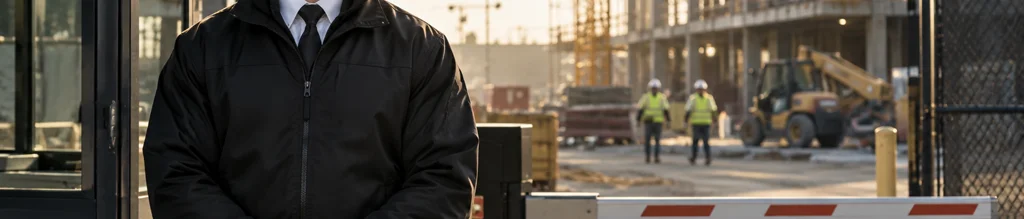
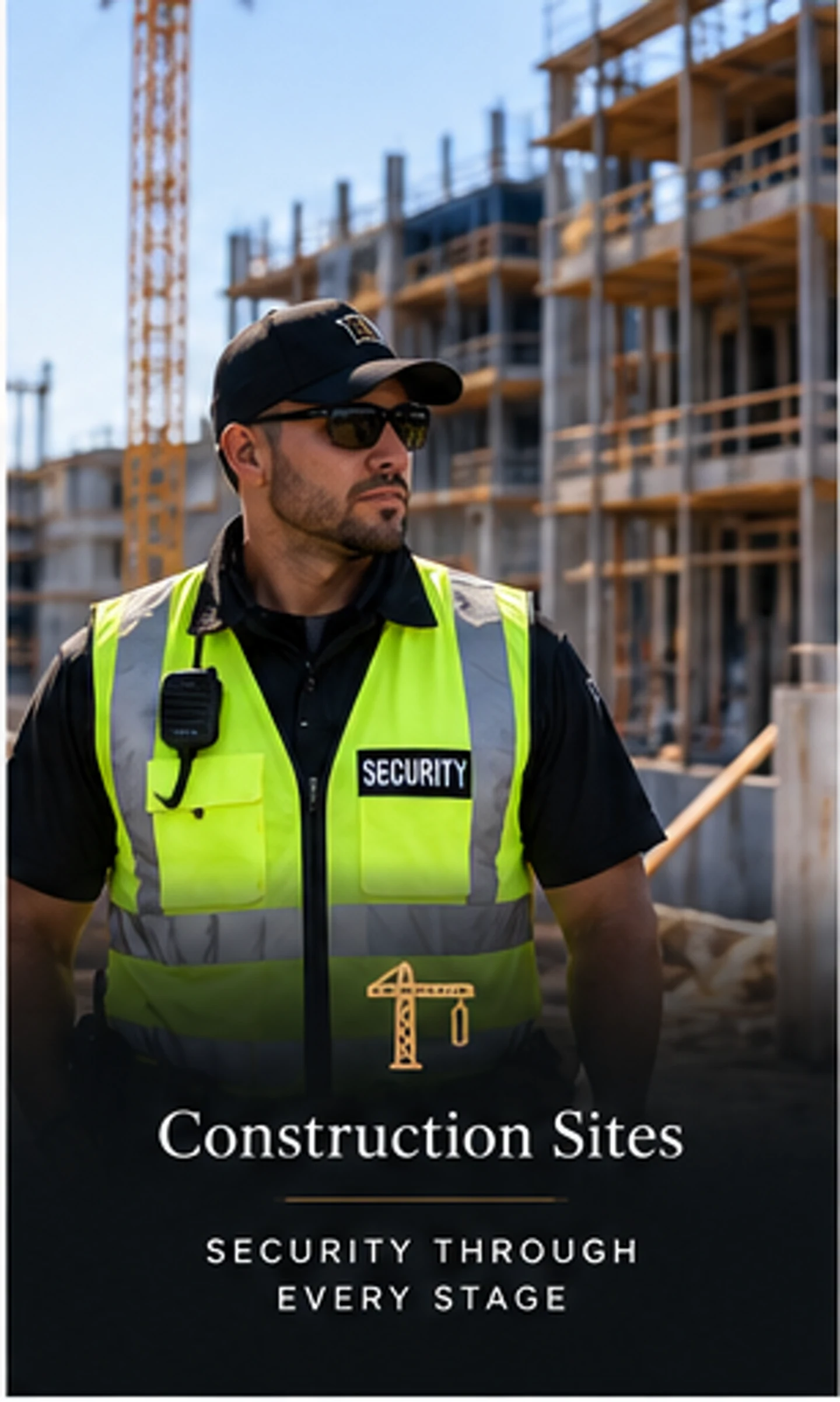
Construction site security in Washington, DC covers the after-hours and weekend gaps in the general contractor's own presence. Officer coverage is scoped against the site fence line, the trailer row, the material storage, and the equipment lay-down — the brief names the checkpoints and the frequency, with a documented pattern for the least-lit corners of the parcel. DC has specific construction-hour and noise-ordinance rules for overnight work — the brief references those constraints so the officer knows what the site is and is not permitted to do during the covered hours.
Sites along downtown along K Street and 14th Street and elsewhere in Washington, DC typically want a fixed post at the main gate paired with an interior walking round; larger parcels may add a second officer or a mobile loop between structures. AES coordinates start and end times to the site's own daily open and close, not to a fixed clock that misses the handover window with the GC's project superintendent.
- Gate, access-log and visitor control
- Documented rounds through the site
- CCTV monitoring where installed
- Equipment-focused overnight coverage
- Coordinates with the site superintendent
Who books construction site security in Washington, DC?
Construction site security enquiries in Washington, DC come from general contractors on active builds, developer clients holding open parcels between phases, and property owners on rehabilitation projects along downtown along K Street and 14th Street. The scope typically covers evenings, overnights, weekends, and holiday windows.
AES writes the fence-line, the interior route, the trailer row, and the equipment lay-down into the brief. Where the site sits inside a residential or mixed-use edge — common in Washington, DC — the brief also documents the neighbor-facing conduct expected of an officer on the shift.
Washington · construction site security FAQs.
When does a construction site typically need overnight coverage?
Overnight coverage is typical during periods of high equipment value on site, after material deliveries, and when active access-log control is required outside of working hours.
Can you provide fire watch during construction?
Yes — fire watch during construction where authority-directed or where fire-suppression systems are interrupted is a scoped service. See our fire-watch page.
Do you monitor the site CCTV?
Where CCTV is installed and access is granted, AES officers monitor and log as part of the site brief.
How is site access recorded?
Access is logged manually or via the site's existing electronic system, delivered nightly with the shift report.
How do you handle motorcade or short-notice road closures in DC?
Motorcade closures and Secret Service perimeters can appear on short notice along Pennsylvania Avenue, 16th Street, K Street, and the Capitol Hill approaches. Post orders name the standing detour and the alternate arrival route, and the dispatcher tracks live routing on shift-change so relief still arrives on time.
Are your officers licensed to work in the District?
Yes. Assignments in Washington, DC are staffed under the District's Special Police Officer or Security Officer framework as the specific role requires, distinct from Virginia's DCJS 01A. The site brief names the applicable DC licensing for the role before day one.
Construction Site Security in the surrounding DMV.
Washington sits within the broader AES daily catchment. Explore the same service in adjacent locations, or discuss a multi-site scope with AES directly.
Discuss the actual role.
Every Washington enquiry is scoped in writing before commitment. Explore an adjacent service if the fit is closer.