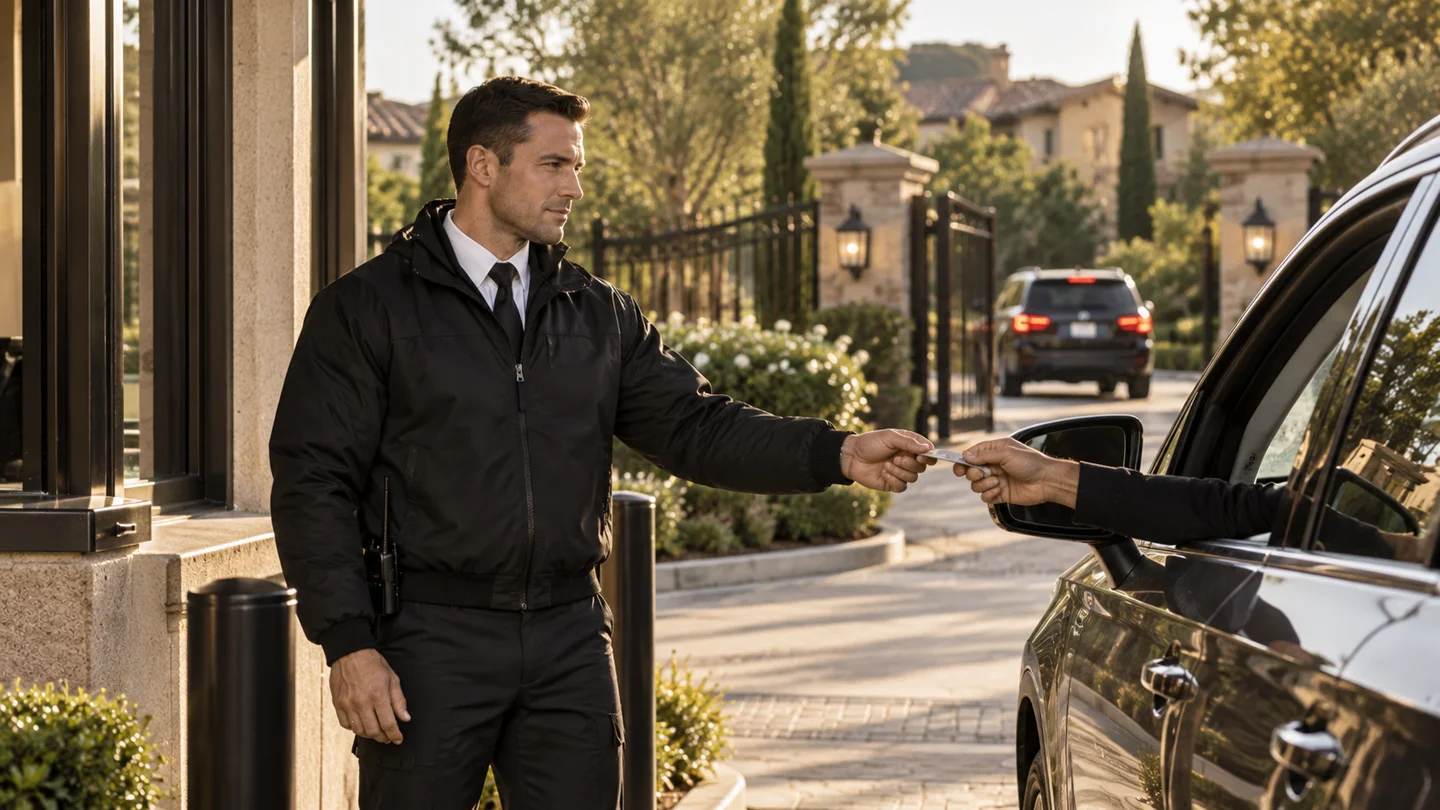
Mobile patrol routes through Washington and the surrounding the District of Columbia lines.
Mobile patrol in Washington, DC runs on a written route: the entry point, the loop sequence, the stop frequency, and the checkpoint at each stop. Vehicle patrol coordinates with property boards where an HOA or condominium association governs the parcel, and every visit is recorded — timestamp, GPS ping, and observation notes — into a daily report that reaches the client by email on schedule. In DC the route also accounts for the recurring one-way pattern in the downtown grid and for the standing motorcade contingencies along Pennsylvania Avenue, 16th Street, and the Capitol Hill approaches — where a live closure appears the route drops to a documented fallback loop.
For dense sites in Washington, DC — the K Street office stack, the residential towers in the Golden Triangle and NoMa, the Capitol Hill townhouse blocks, and the Navy Yard mixed-use development — the brief separates the garage patrol pattern from the exterior perimeter pattern: level-by-level in the structured decks, elevator lobby checks at the deck-to-tower transition, and a set walking cadence on the street-level perimeter. Vehicle staging is written into the brief to keep the patrol car in a lawful and appropriate spot between loops.
- Marked or unmarked vehicle coverage
- Route designed against the property map
- Time-stamped stop confirmations
- Documented rounds emailed nightly
- Available for HOA, community and property boards
Who books mobile patrol in the Washington, DC area?
Mobile and HOA patrol enquiries in Washington, DC come from association headquarters in the K Street and 16th Street corridors, hotels and hospitality across the four quadrants, private clubs, condominium concierge desks in the Golden Triangle and NoMa towers, and commercial property managers along the downtown core. Route work in Washington, DC typically covers a defined territory — a residential cluster, a property portfolio, or a corridor stretch — with a documented checkpoint list and a fixed reporting cadence.
AES writes the boundary into the brief so there is no ambiguity about what the patrol covers and what it doesn't. For portfolios that cross into adjacent jurisdictions, the brief documents the loop that keeps each stop on schedule and the dispatcher who receives the confirmation on each round.
Washington · mobile & hoa patrol FAQs.
What is the difference between a fixed post and a mobile patrol?
A fixed post is one officer at a defined location. A mobile patrol is a vehicle-based roving assignment across multiple stops. Different responsibilities, different pricing, different reporting cadence — the site brief specifies which.
How often does the patrol come by?
Frequency is agreed in the brief — typically two to four passes per shift, staggered so timing is not predictable. Increased frequency during holidays and community events is quoted separately.
Do you provide a report after each shift?
Yes. Stop confirmations and any observations are timestamped and delivered by email within the hour following shift end.
Can the same patrol cover multiple HOAs?
Yes, subject to boundary geography. Shared coverage is quoted per-community with clear boundary definitions in each brief.
How do you handle motorcade or short-notice road closures in DC?
Motorcade closures and Secret Service perimeters can appear on short notice along Pennsylvania Avenue, 16th Street, K Street, and the Capitol Hill approaches. Post orders name the standing detour and the alternate arrival route, and the dispatcher tracks live routing on shift-change so relief still arrives on time.
Are your officers licensed to work in the District?
Yes. Assignments in Washington, DC are staffed under the District's Special Police Officer or Security Officer framework as the specific role requires, distinct from Virginia's DCJS 01A. The site brief names the applicable DC licensing for the role before day one.
Mobile & HOA Patrol in the surrounding DMV.
Washington sits within the broader AES daily catchment. Explore the same service in adjacent locations, or discuss a multi-site scope with AES directly.
Discuss the actual role.
Every Washington enquiry is scoped in writing before commitment. Explore an adjacent service if the fit is closer.