Start with the purpose, not a preferred label.
A property may need someone assigned to a particular entrance or role. Another enquiry may concern checks across shared areas at agreed times. These are different requirements even when both are described as security coverage.
Ask what you want the arrangement to achieve in practical terms. The answer should name a task, place, and timeframe—not simply choose the service that sounds more comprehensive.
A fixed post defines an onsite responsibility.
A security officer assignment may involve a defined position or set of onsite duties. The important questions are where the role sits, what hours it covers, how instructions are given, and what remains outside its scope.
Do not assume that an onsite person can simultaneously cover every entrance, supervise every shared space, and perform unrelated reception or maintenance work. The proposal should explain the actual responsibilities.
A patrol arrangement defines movement and timing.
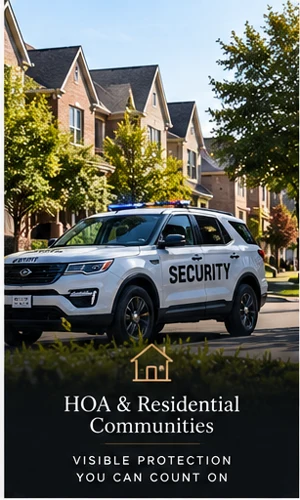
Mobile patrol concerns roving coverage rather than a permanent position at each location. Ask what areas are included, how the schedule is described, and what communication or reporting is part of the arrangement.
Patrol should not be interpreted as continuous observation of every space. A property manager should understand the difference before describing the service to tenants, residents, staff, or an association board.
The decision is not always either/or.
Some property briefs contain more than one distinct need. An entrance-related assignment and a separate shared-area requirement may need to be discussed together. That does not mean a combined arrangement is automatically feasible or available.
Describe each task separately so AES can review the location, staffing, timing, and scope. A vague hybrid promise can be harder to manage than two clearly bounded responsibilities.
Compare the written scope rather than the headline cost.
Record the schedule, property areas, tasks, exclusions, and point of contact for each proposal. Check whether the commercial assumptions match. A lower price may describe less time or a different role rather than the same service delivered differently.
For residential settings, review HOA patrol or apartment and condominium security. For commercial buildings, use the property page to put the service choice in context.
Revisit the choice when the property changes.
A new tenant, different opening hours, construction work, or an event may change the original requirement. A decision that made sense under one set of instructions should not be treated as permanent by default.
Use the service review guide to identify changes before they become conflicting expectations. Start a new enquiry when the proposed work extends beyond the existing arrangement.
| Question | Defined onsite role | Mobile patrol |
|---|---|---|
| Form of presence | An agreed assignment at the property | Roving coverage of agreed locations or areas |
| What to confirm | Duties, post, schedule, and responsibilities | Areas, timing, duties, reporting, and limitations |
| What not to assume | One role covers every property function | A visit equals continuous observation |
Where do you need support?
Review the regional information, then confirm availability and assignment requirements directly.