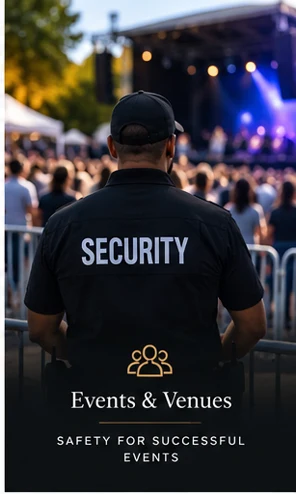
1. Put the organizer and venue in the same picture.
Identify who is organizing the event, who manages the premises, and who can approve the proposed security arrangement. The event may be temporary, but the venue already has staff, policies, and responsibilities.
Describe the event type, date, location, and broad attendance range. Keep the first brief general. You do not need to disclose a private guest list or sensitive itinerary through a website enquiry.
2. Map the periods before and after the main event.
List setup, supplier access, guest arrival, the event itself, departure, and breakdown as separate phases. Decide which periods belong in the request and which remain with the venue or organizer.
The purpose is not to create a minute-by-minute operational plan on a public page. It is to avoid asking for coverage during the visible portion of the event while leaving the beginning and end undefined.
3. Identify the responsibilities to discuss.
A request might concern crowd-management support, a defined presence at particular areas, or coordination around guest movements. Explain what the venue team already handles and what the organizer expects from a security assignment.
Use event security for the service overview. Avoid assigning responsibilities by assumption. Admission policies, guest services, and management decisions need clear owners.
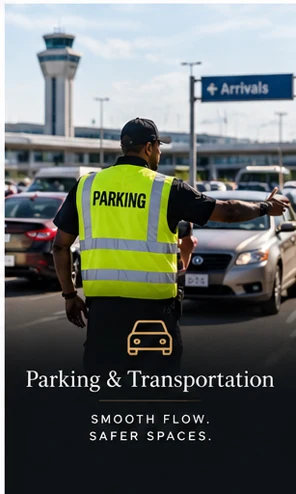
4. Treat parking and traffic as distinct questions.
Describe whether parking is on private property, shared with other users, or connected to activity outside the venue boundary. Identify the person already responsible for the parking arrangement.
Review parking and traffic support and ask about the actual permissions and scope needed. A general event-security request does not establish authority for public-road work or enforcement.
5. Agree how instructions and changes will be handled.
Name the authorized contact for the event and the venue. Decide how a timing change or a question about responsibility reaches the person who can act on it. Keep emergency arrangements under the direction of the responsible venue and authorities.
This guide is not an emergency plan or a venue-specific safety assessment. Relevant requirements and procedures must be confirmed with the people responsible for the actual event.
6. Confirm the arrangement before treating it as booked.
Send the general brief through the contact page and ask what is needed next. Confirm availability, duties, dates, hours, commercial terms, and the contact chain directly before relying on a service.
For hospitality properties or restaurants, see event venues and hotels. Separate the ordinary property operation from the event-specific work so neither disappears inside the other.
Where do you need support?
Review the regional information, then confirm availability and assignment requirements directly.